Essay
Twin Peaks (seasons 1 and 2)
David Lynch · United States, 1990
- #ead7b0
- #736952
- #0f140d
- #ac9670
- #473730
Who killed Laura Palmer? That is the question that fascinated millions of Americans after the first episode of Twin Peaks aired. This series, created in 1990 by David Lynch and Mark Frost, is without a doubt David Lynch’s central work, the one that defines him best, his masterpiece. And yet the first two seasons are not free of flaws. Some episodes not directed by Lynch can feel weaker than the ones he directed; this is especially noticeable in the second half of the second season, when Lynch steps away from the series, which then gets lost in uninteresting storylines, before he returns for the season’s last episode, which brings the series to a masterful close.

Twin Peaks is first of all a crime series set in the small fictional town of the same name, in Washington State, where we follow FBI Special Agent Dale Cooper as he teams up with Sheriff Truman to solve the murder of Laura Palmer, a seemingly angelic and innocent teenager. It is therefore a pleasure for the viewer to discover all the secrets surrounding Laura, as well as all those that haunt the town of Twin Peaks, which nonetheless seemed ordinary and peaceful.
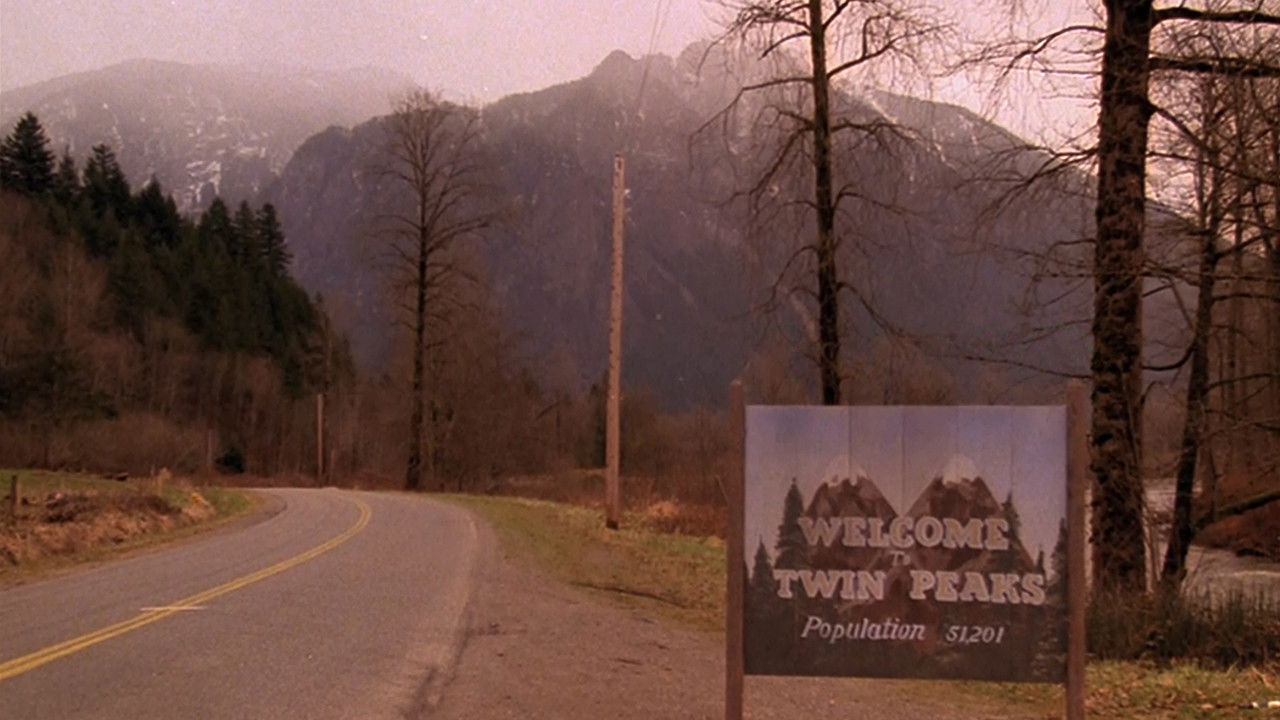
The atmosphere the series immerses us in is one of its greatest qualities. Setting Twin Peaks in the vast misty forests of Washington State, on the Canadian border, creates an autumnal mood that heightens the mystery. Wood is everywhere and seems mysterious in itself, so much does it fill the frame. The wind bending those same trees and the mist drifting into the scenery give the investigation an aesthetic quality. When Agent Dale Cooper goes to the Double R Diner for his “black coffee” and his “cherry pie”, we can only want to do the same. The atmosphere of Twin Peaks is contagious.
The beauty of Twin Peaks also lies in its characters, as is often the case with David Lynch. Laura Palmer almost never appears on screen, yet she haunts the whole series through her portrait, through the few seconds of video in which a motorcycle appears reflected in her eyes, and through the discovery of her secrets, which drive the narrative. Agent Dale Cooper, for his part, is a unique, mysterious character, with a contagious humanity and simplicity. His investigative methods are strange and hardly advisable, but fascinating, so much does he trust his instinct and his dreams, in an almost religious way. I will refrain from describing every character in the series, though I could, so captivating are they all through their unique personalities and the secrets they keep from us. The series is also capable of genuinely funny scenes that do not clash at all with the serious tone of the plot; on the contrary, the two work together and overlap naturally.
What makes Twin Peaks so striking, in my view, is above all the way the supernatural gradually seeps into the series. As early as the third episode, Dale has a rather strange dream that gives him clues for his investigation. The agent’s dreams return several times and are one of the main supernatural elements, so mysterious are they, and so concretely do they play out in the series’ reality. It is the supernatural that makes Twin Peaks a Lynchian series. Here we find the flights of fancy and oddities characteristic of his career. Through the supernatural, Lynch manages to turn any situation into a distressing one, by means just as mystical, which I could not explain but which work all the same. This becomes a flaw, since when Lynch is not directing, the intrusions of supernatural elements struggle to work and fail to create the same magic as Lynch.

Every work by David Lynch must also have a unique musical world. That is of course the case with Twin Peaks, and it is even where he succeeds best, in my opinion. The soundscape created by Angelo Badalamenti is essential, because it constantly accompanies the viewer through the plot. The music is ever-present, and where this might have been a flaw in other works, in Twin Peaks it works, because it accompanies the emotions conveyed by the image instead of trying to create an emotion the image does not convey, as is sometimes the case in other films of questionable quality.
Twin Peaks does not escape the pitfalls of the television industry, however. In the second season especially, the series suffers from storylines resolved too quickly to satisfy the audience, and others dragged out to fill the episode length required by the ABC network. This results in an uneven pace from one episode to the next. The episodic format of television also forces the writers to add a twist at the end of every episode in the hope of bringing viewers back the following week, a completely artificial device that generally leads nowhere when it is not essential to the plot.
In the end, Twin Peaks is a real plunge into a fascinating world that soon overwhelms us. Although the identity of Laura’s killer is revealed, the series ultimately leaves us with more questions than answers in a final episode that calls everything into question, and it would take 25 years to find the answers in the third season: Twin Peaks: The Return.
Filming locations
Los Angeles · Issaquah · North Bend · Everett · Snoqualmie · Griffith Park · Tukwila · Fall City