Essay
Twin Peaks: Fire Walk with Me
David Lynch · United States, 1992
- #8d191d
- #72528b
- #b36a4b
- #311111
- #f7b2ac
Twin Peaks: Fire Walk with Me shows us the last days of Laura Palmer before her death. Since the film takes place before the series, whose conclusion we already know, it could have been merely anecdotal, yet another film of little interest showing the events leading up to those of the series that will solve the investigation. Twin Peaks: Fire Walk with Me is quite the opposite: although we know the identity of Laura’s killer, the film is the culmination and the true conclusion of Twin Peaks, until the third season released 25 years later. The film even heralds elements that will keep returning throughout Lynch’s career, such as his fascination with time and the intertwining of different storylines across time, which will partly account for the success of his following films: Lost Highway and Mulholland Drive.

This film must be taken as part of a whole. Lynch does not present us with a simple standalone film: to feel it fully, it must be joined to the two seasons of the series. Lynch constantly plays with the expectations of the viewer, whom he knows perfectly. The viewer already knows the identity of Laura’s killer and broadly knows how her murder unfolds. The film therefore announces this ending to us, one we cannot change, but can only watch and feel.
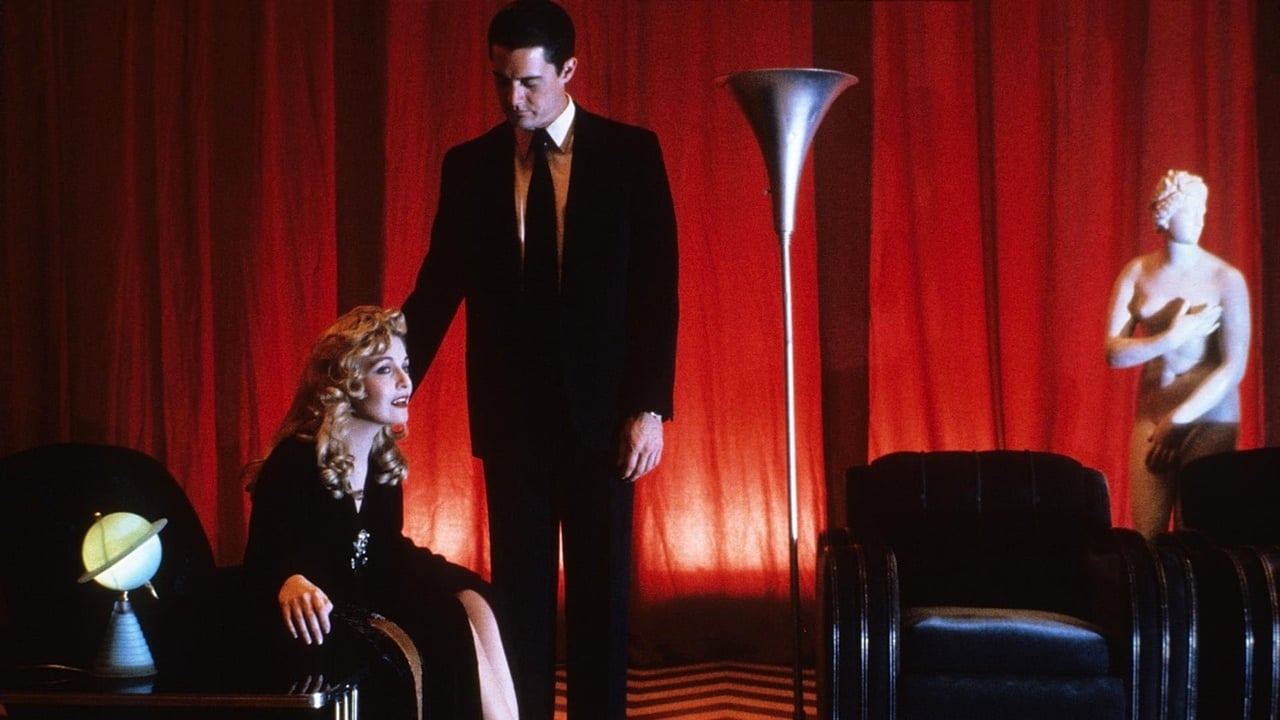
The film’s genius can be seen from its very first minutes. The viewer, expecting to return to the town of Twin Peaks and the iconic characters they know so well, is instead confronted with another investigation led by two FBI agents unknown to us, who travel to a small town to investigate the death of a young teenage girl. The viewer thus faces a mirror of the series’ first episodes, except that this time the aesthetic is not the same. The warm and naive atmosphere of Twin Peaks gives way to the cold and serious atmosphere of this mysterious town. A scene in which one agent explains to another the meaning of a coded message delivered by a mime lets us understand that from now on, it is also up to the viewer to lead the investigation by observing the symbols the film gives them. This is true of this film, but it will also be true of the rest of Lynch’s career.
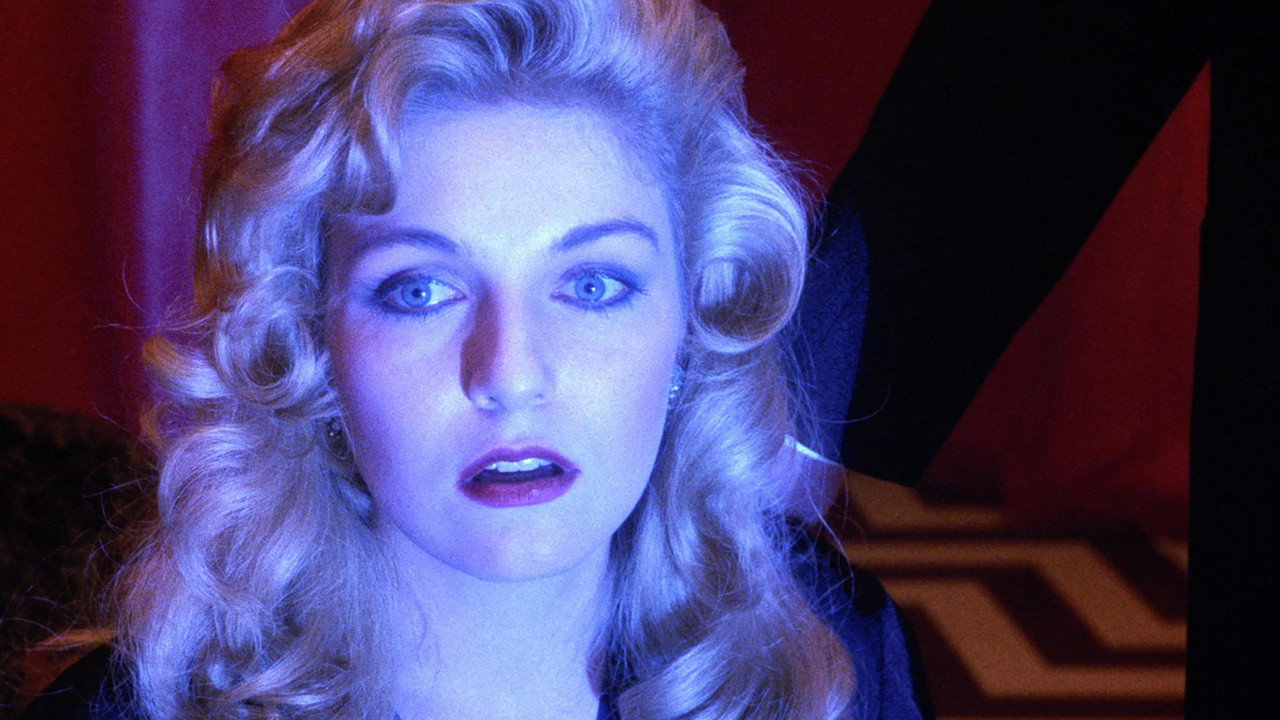
The aesthetic of Fire Walk with Me breaks completely with that of the series. The film is therefore a genuine critique of the series, which aestheticised Laura Palmer’s death. Above all, the film is there to remind us of the horror Laura lived through. The viewer is made uneasy because they realise that, for two entire seasons, they took pleasure in watching the investigation into Laura’s murder being solved. Fire Walk with Me recalls the tragedy of the event. Nothing in the film is pleasant. For the whole length of the film, the viewer can only endure the horror they had refused to see during the series. The viewer faces their own carelessness, and what they had paid no attention to comes back to them here with violence. The fantastical side of the series had allowed us to overlook the horror Laura lived through; here, we share her reality.
If the film is so intense for the viewer, it is also thanks to the performances of the actors, who elevate this already exceptional story. Sheryl Lee as Laura Palmer is without a doubt the finest performance I have ever seen. I cannot remember a performance that gave me more emotion than that of Sheryl Lee, who completely transforms into Laura. All the more so since we had never seen Laura Palmer physically present before, as she had only been shown through her portrait or a short video. Through her looks and expressions, Sheryl Lee makes us feel her character’s emotions, which reach through the screen. The performances of her parents are also magnificent, especially that of Leland, who manages to show us his inner duality. The change of actress for the character of Donna between the series and the film is also interesting, even though it was probably not intentional. Indeed, it is fitting to note that Donna, before Laura’s death, is a character very far from the one she will become after it. Agent Dale Cooper, still played by Kyle MacLachlan, is also interesting, as he shows us the birth of the strange connection, defying the laws of time, that binds him to Laura, whom he does not yet know.

The film’s horror is also a great success. The sudden appearances of Bob, who we learn has haunted Laura since she was 12, frighten us. They even do more, because the viewer, knowing the real man behind Bob, grasps the horror Laura is confronted with. The horror scenes therefore become tragic, so much does the emotion the viewer faces in these scenes outweigh their horror. I was not surprised to learn that some viewers say they were deeply shaken by the film, so much does the mix of horror, disgust and sadness create an intense and unique emotion that can only leave one with a deep sense of unease. This intensity is almost constant whenever Laura is on screen, and shows us the constant paranoia that has lived within her since she was 12.
The film’s musical atmosphere differs fundamentally from the one we loved so much in the series. Although the composer is still Angelo Badalamenti, the emotion conveyed by the soundtrack is very different. In Fire Walk with Me, the music brings a melancholy and a coldness we had not heard in the series. Laura Palmer’s theme, so iconic in the series, returns only on rare occasions, which makes its power even stronger and more tragic than it was in the series. The final scene, carried by the theme “The Voice of Love” that closes the work, is of striking emotional intensity, leaving us, once we have lived through it, with many minutes of silence and inner emptiness. One of the greatest sequences in cinema owes its greatness to this unique music: Laura enters the Roadhouse while Julee Cruise performs “Questions in a World of Blue” on stage. This creates a deeply melancholic atmosphere, while the room is bathed in a blue light symbolising this emotion. A few minutes later, Laura enters the “Pink Room”, and a strobing red light floods the frame and accompanies this dark jazz, which drowns out the dialogue, while Laura completely lets go and abruptly drifts away from the character she was a few minutes earlier. This radical sequence, both musically and visually, is utterly hypnotic and magnificent, so much does it seem to suspend time.
For all these reasons, Twin Peaks: Fire Walk with Me is my favourite work by Lynch, and even one of my favourite films, by any filmmaker. The film is a truly unsettling sensory experience that stays with the viewer. The viewer is confronted with their own helplessness. They know how Laura is going to die, but can do nothing about it. They are only a spectator of a story whose ending they know, and can only watch it unfold. They know the inevitability of the story, but can only accompany Laura in her final moments. For Laura is going to die without any angel coming to save her…
Filming locations
Washington